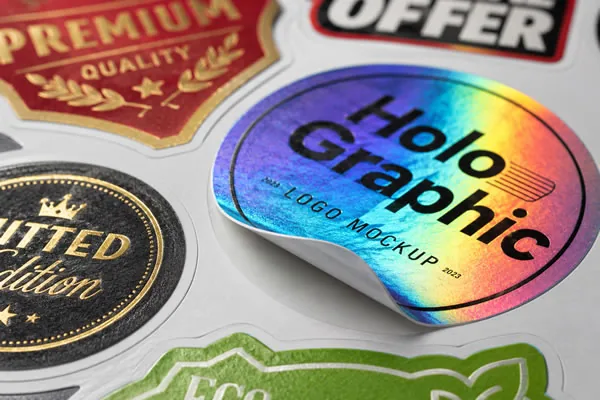
The global vinyl sticker and signage market is entering a critical inflection point. According to Grand View Research, the global sign-making market was valued at approximately $45.3 billion in 2024 and is projected to grow at a CAGR of 3.8% from 2025 to 2030. Within this ecosystem, vinyl-based applications — vehicle wraps, wall graphics, retail POS displays, and custom decals — account for a disproportionate share of margin-rich, short-run production. For distributors and large-format converters, the question is no longer whether to invest in digital cutting capacity, but which system captures the highest throughput ROI per square meter.
For a complete breakdown of digital cutting technology and how to choose the right machine, read our complete digital cutting machine guide.
At LDCUT, we manufacture high-speed CNC oscillating knife cutting machines from our factory in China. With 22+ years of manufacturing expertise and installations in 80+ countries across over 3,000 enterprises, our equipment runs daily in packaging, signage, and textile production lines worldwide. This article draws on that manufacturing perspective to provide a procurement framework for vinyl sticker and signage cutting equipment — written for distributors, channel partners, and print-shop operators evaluating CNC digital flatbed cutters.
1. The Vinyl Sticker & Signage Equipment Market: Why Now?
1.1 Market Expansion Driven by Decentralized Production
Three structural shifts are reshaping demand for vinyl cutting equipment:
Shift 1 — Short-run economics are displacing analog die-cutting.
Traditional die-cutting requires custom steel-rule dies with lead times of 2–4 weeks and upfront tooling costs per SKU. A single die can cost $200–$600. For production runs under 500 units or SKU counts exceeding 50 variants, die-cutting becomes economically unviable. CNC digital flatbed cutters eliminate tooling altogether — the same machine processes sticker sheets, kiss-cut roll material, and rigid signage substrates (corrugated board, PVC foam board, acrylic) without any die changeover. LDCUT's die-less digital cutting systems, powered by proprietary ICUT control software and multi-functional quick-change tool heads (changed in under 3 minutes without tools), deliver exactly this flexibility. This structural cost advantage is driving accelerated adoption among mid-volume converters across North America, Europe, and Southeast Asia.
Shift 2 — E-commerce is fragmenting order sizes.
Platforms like Etsy, Amazon Handmade, and Shopify-powered custom sticker stores have created a long tail of small-batch, high-SKU-count orders. According to Smithers, the global digitally printed label and packaging segment alone is expected to reach $27.5 billion by 2027 (Smithers, The Future of Digital Print for Packaging to 2027). Distributors who serve this segment need cutting platforms that can toggle between job sizes in under 60 seconds — something traditional die-based workflows cannot deliver.
Shift 3 — Signage demand from EV infrastructure and retail modernization.
Charging station branding, fleet electrification graphics, and experiential retail environments are creating net-new signage demand. Each charging station represents a 5–15 m² vinyl application. With global EV charging infrastructure projected to exceed 30 million units by 2030 (IEA, Global EV Outlook 2025), the addressable volume for vinyl signage production is expanding faster than general GDP growth.
1.2 The Distributor's Profit Case
For a channel partner evaluating whether to add a CNC digital flatbed cutter to their product portfolio, the unit economics are compelling:
| End-Customer Vertical | Average Job Value | Monthly Order Volume (Typical Regional Converter) | Estimated Annual Revenue Potential |
|---|---|---|---|
| Vehicle wrap shops | $800–$3,000/job | 15–40 jobs | $180,000–$720,000 |
| Signage fabricators | $2,000–$12,000/job | 8–20 jobs | $240,000–$1,200,000 |
| Custom sticker e-commerce | $12–$45/order | 800–3,000 orders | $144,000–$540,000 |
| Promotional product distributors | $300–$1,500/job | 20–50 jobs | $96,000–$450,000 |
Data: Industry benchmarks derived from SGIA and FESPA converter surveys.
An LDCUT K8 or L8 series digital cutter — servo-driven, with kiss-cut (KCT) and drag-cut (DCT) tool capability, camera registration at 0.025 mm resolution, and a 1.6 m × 2.5 m working area — carries an end-user equipment cost substantially below the capital investment required for a traditional rotary die-cutting line. At the revenue levels above, payback periods routinely fall within 4–12 months — a capital efficiency ratio that positions digital cutters as one of the most defensible equipment sales SKUs in a distributor's catalog.
What Is Kiss Cutting? A Complete Guide to Kiss-Cut Technology
Before comparing machines, get the definition straight. What is a kiss cut — and what is kiss cutting more broadly? A kiss cut slices only the top layer of a multi-layer material (typically vinyl or adhesive film) while leaving the backing liner completely intact. The blade penetrates the face stock but stops short of the release paper. That is the entire trick: kiss cutting separates the sticker from its substrate without freeing it from the sheet.
This matters because a kiss cut vs full cut decision changes the finished product. A full cut slices through everything — individual loose decals. A kiss cut keeps the decals attached to the liner so the end user peels them one at a time. Kiss cutting vs die cutting is a different axis: die cutting uses a steel rule die to punch parts, while die cut vs kiss cut can both be done digitally without any die. The standout advantage of kiss cutting adhesive work on a digital cutter is depth control, so even aggressive adhesive films cut cleanly without nicking the liner.
2. How Digital Cutter Processes Vinyl: Technology Fundamentals
When purchasing a digital cutting machine, one of the most important architectural decisions is the blade ecosystem. The LDCUT platform supports a variety of professional-grade blades, all of which can be swapped out in under 3 minutes without tools. The two blades below are the most commonly used for cutting vinyl materials.
KCT — Kiss Cut Tool (Primary for Vinyl Stickers)
The KCT is purpose-built for kiss-cutting applications on adhesive vinyl, multi-layer label materials, and composite films. It precisely controls blade depth to cut through the surface material while leaving the backing paper intact — the core operation behind kiss-cut sticker sheet production. With LDCUT's servo-driven Z-axis, the KCT automatically adjusts blade extension per job parameter, eliminating manual depth calibration between production runs.
DCT — Drag Cutting Tool
For thin-material contour cutting, the DCT provides 360-degree free rotation for complex pattern cutting on PVC roll material, PP paper, vinyl, cardstock, reflective board, ABS, and phenolic board. Designed for materials in the 0.1–3 mm thickness range, the DCT complements the KCT for applications where full through-cutting is required alongside kiss-cut operations — for example, cutting individual decals from a nested sheet after kiss-cut perimeter processing.
3. Application Case Study: Vinyl Sticker Production on an LDCUT L8
End-to-End Workflow
Step 1 — Artwork Preparation
Customer artwork is received in AI/PDF format and imported into ICUT. The software's automatic nesting algorithm optimizes panel layout for material utilization and auto-generates tool paths with lead-in/lead-out compensation for sharp corners. Standard DXF/PLT vector tool paths or JPG/TIF raster-to-vector trace are both supported.
Step 2 — Media Loading
Pre-printed vinyl roll (typically 1.37 m or 1.52 m width) is positioned on the aircraft-grade aluminum vacuum table. The L Series' rolling felt conveyor supports continuous roll-to-sheet feeding — eliminating manual sheet repositioning between jobs. Zonal vacuum control allows the operator to activate suction only on the covered area, maximizing hold-down force while avoiding media deformation on thin cast vinyl (50–80 micron).
Step 3 — Camera Registration
The CCD camera scans registration marks printed at sheet corners. ICUT software calculates X/Y offset, rotation angle, and any trapezoidal distortion, then transforms the tool path to match the actual media position. Registration accuracy: 0.025 mm.
Step 4 — Kiss-Cutting with KCT
The KCT kiss-cut tool executes perimeter paths — cutting through the vinyl layer while leaving the release liner intact. Blade depth is controlled via ICUT's auto-depth calibration routine. For cast vinyl, typical blade extension is 0.3–0.5 mm beyond vinyl thickness. The Leadshine brushless servo motor's closed-loop torque feedback prevents blade binding on adhesive layers.
Step 5 — Contour Through-Cutting with DCT
Where full through-cuts are required (e.g., sheet outer boundary, individual decal separation), the DCT drag cutting tool performs 360-degree contour cuts. The operator can switch between KCT and DCT tool heads in under 3 minutes without tools.
Step 6 — Weeding and Finishing
Post-cut, excess vinyl is weeded. The kiss-cut matrix is cleanly removable when blade depth and tool-path geometry are correctly parameterized in ICUT. Finished sheets proceed to packaging.
Best Kiss Cutting Machine for Sticker Production (2026)
A cnc sticker cutting machine using CNC motion delivers sharper corners and tighter registration than drag-only plotters, which is why many converters upgrade. If you are sourcing a kiss cutting press alternative or a versatile vinyl stickers machine for both kiss and through cuts, choose a platform where the KCT and DCT heads swap in under three minutes. See our kiss cutting technique guide for parameter settings.
4. Frequently Asked Questions (FAQ)
Q1: Can one LDCUT machine handle both kiss-cut stickers and full through-cuts?
Yes. The LDCUT multi-tool platform supports both the KCT (kiss-cut) and DCT (drag-cut) tool heads on a single machine. A single ICUT job file can contain mixed operations — kiss-cut for sticker perimeters, through-cut for the sheet outer boundary, and creasing for fold lines. The operator switches tool heads in under 3 minutes without tools. The ICUT servo-driven Z-axis automatically adjusts blade extension between operations based on stored material profiles.
Q2: Does the LDCUT ICUT software integrate with RIP software and workflow automation?
ICUT supports direct file import from RIP output via DXF, PLT, JPG, and TIF formats. For automated production environments, ICUT's multi-material preset system stores cutting parameters (speed, blade depth, oscillation frequency) for recall by job type. ICUT also supports automatic roll feeding and batch processing of oversized and multi-file jobs — reducing operator touchpoints. For advanced integration needs (ERP connectivity, production analytics API), contact LDCUT's engineering team to discuss your specific workflow requirements.
Q3: How fast is an LDCUT machine compared to competing digital cutters?
LDCUT machines operate at a maximum idle travel speed of 120 m/min with a high-frequency oscillation (L10, K8, K10 models). However, raw linear speed is only one variable — the more important metric for vinyl sticker production is acceleration and deceleration performance on short-path segments, which is driven by the imported ground rack transmission system and brushless servo drive. LDCUT's gantry architecture is designed specifically for the high-frequency, short-tool-path motion profile characteristic of kiss-cut sticker production.
Actual production speed depends on material thickness, profile complexity, and precision requirements. We recommend that customers provide samples for testing.
Q4: What is the difference between kiss cut and die cut?
A kiss cut slices only the top layer and leaves the backing liner intact, so stickers stay on the sheet until peeled. A die cut uses a steel rule die to punch through all layers, freeing individual parts. The key difference: kiss cutting is die-free and digital, so there is no tooling cost and designs change in minutes — unlike traditional die cutting.
Q5: What materials can be kiss cut?
Any material with a face layer plus a liner works: vinyl stickers, self-adhesive labels, double-sided tape, laminates, magnetic sheets, and composite films. The common requirement is a top layer you want to separate from a backing. For kiss cutting adhesive films, blade depth control is what keeps the liner unscathed.
Q6: Can I use a kiss cut machine for full cutting too?
Yes. On the LDCUT platform the KCT head performs kiss cuts and the DCT head performs full through-cuts, and they swap in under three minutes. A single ICUT job can mix both operations — kiss-cut the sticker perimeter, through-cut the sheet outline — so one machine covers an entire sticker finishing workflow.
5. Conclusion and Procurement Next Steps
The vinyl sticker and signage equipment market rewards early movers in distribution. As analog die-cutting retreats from short-to-medium-run segments and global signage demand expands — driven by EV infrastructure, e-commerce personalization, and retail modernization — the CNC digital flatbed cutter represents a structurally growing equipment category with demonstrable distributor ROI.
Take the next step: Request a personalized consultation with the LDCUT engineering team to discuss your specific production requirements and discover which model best fits your business needs — at no obligation.